HVAC guides
Cooling an Older New Jersey Home That Has No Ductwork
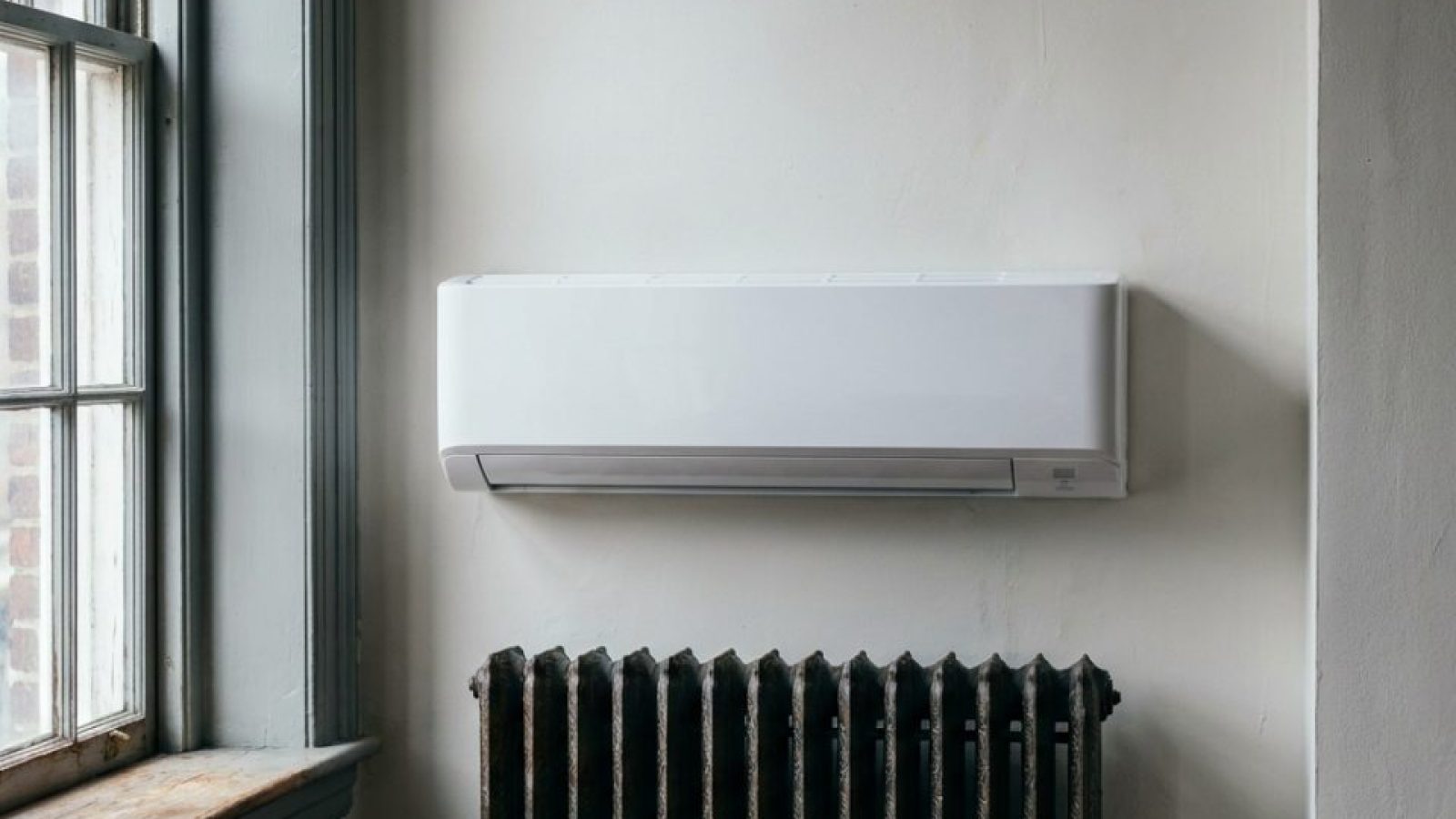
Much of northern New Jersey was built before ducted heating existed. If your heat arrives through radiators, adding cooling is a genuine design decision rather than a purchase — and there are four real answers.
Short answer
The four options are ductless mini-splits, high-velocity small-duct systems, through-wall or PTAC units, and a conventional duct retrofit. Ductless suits most houses. High-velocity suits ones where preserving plaster and trim matters most. A full duct retrofit is the most disruptive and rarely the best answer.
Why this comes up so often here
Hudson, Essex, Passaic, the older parts of Bergen and Mercer, and the historic cores of Trenton and Newark are dominated by housing heated by steam or hot water radiators. There is no duct system to attach cooling to, and often nowhere obvious to put one without losing closets, dropping ceilings and opening plaster.
That is not a defect in the house. It is what the house is, and the right approach works with it rather than against it.
Option one: ductless mini-splits
The default answer for most of this housing, and usually the right one.
What it involves
An outdoor unit, and indoor heads connected to it by a refrigerant line set through a three-inch hole per head. No ducts, no chases, no dropped ceilings. A single-zone install is often a day.
What it costs you
Visible indoor heads, which some people dislike in a period room — though ceiling cassettes and floor-standing units exist for exactly that objection. Externally, line sets run in a covering channel, and on a street-facing façade the route is worth agreeing before work starts.
The bonus
Modern units heat as well as cool, and heat efficiently. In a house on expensive oil or propane, that changes the economics substantially — and New Jersey rebates apply.
Option two: high-velocity small-duct
The specialist answer where appearance matters more than budget.
What it involves
Small-diameter flexible tubing threaded through existing wall cavities, floor voids and closets, feeding small round outlets rather than conventional registers. It moves air at higher velocity through much smaller ducts, which is why it fits where conventional ductwork will not.
What it costs you
More money than ductless, and it is noisier — the air moves faster. But the visible result is a small round outlet rather than a wall-mounted head, which in a house with original plaster and trim is sometimes the deciding factor.
Option three: through-wall and PTAC units
Common across the Gold Coast and in apartment buildings, and reasonable for a single room.
Where it fits
One room, a rental unit, or a building where the sleeve already exists. Cheaper per room than anything else and completely self-contained.
Where it does not
Whole-house cooling. Efficiency is well below ductless, the units are noisier in the room, and cutting several new sleeves through a masonry wall costs more than a multi-zone ductless system would.
Option four: retrofit conventional ductwork
Possible more often than people think, and still usually the wrong answer.
Where a house has both a full attic and a basement, trunk lines can sometimes run through both and drop into rooms with acceptable losses. Where it has neither — a rowhouse, a flat-roofed building, a house with finished space above and below — the ducts have to go through the living space, which means soffits, boxed corners and lost closets.
Price it against ductless before committing. Frequently it costs more, achieves less, and permanently alters rooms you liked.
Need this done?
Ductless Mini-Split Installation across New Jersey
Free to use, no obligation — we never charge you.
Frequently asked questions
Can central air be installed in a house with no ducts?
Sometimes, where there is an attic and a basement for trunk lines. In a finished pre-war house with neither, it means running ducts through living space — and ductless usually delivers a better result for less money and far less disruption.
Will ductless heads look wrong in a period room?
The standard wall head is prominent. Ceiling cassettes recess into a dropped section, and floor-standing units sit roughly where a radiator does, which suits period rooms better. Worth asking about both rather than accepting the default.
Do I need to remove my radiators?
No. Ductless cooling coexists with an existing radiator system perfectly well, and many New Jersey homeowners keep the boiler for deep winter while using the heat pump for shoulder seasons and cooling.
Is high-velocity worth the extra?
Where preserving original plaster, trim and sightlines is the priority, yes. Where it is not, ductless does the same job more efficiently and more quietly for less.
HVAC services near you
- Trenton
- Newark
- Paterson
- Jersey City
- Hamilton
- Parsippany
- New Brunswick
- Camden
- Clifton
- Edison
- Elizabeth
- Princeton
- Tinton Falls
- Hopatcong
- Plainfield
- Red Bank
- Robertsville
- Sayreville
- Toms River
- Vineland