HVAC guides
Repair or Replace? Deciding on an Older HVAC System in New Jersey
The honest answer is that age and repair cost decide most cases, and four specific findings decide the rest outright — regardless of how the arithmetic looks.
Short answer
Under about ten years, repair almost always wins. Past fifteen, a repair approaching a third of replacement usually does not. Four findings end the argument regardless: a cracked heat exchanger, a compressor failure on an R-22 system, a cracked boiler section, and a corroded evaporator coil on ageing equipment.
The rough arithmetic, and its limits
People want a formula. The common one — multiply the repair cost by the age of the system and replace if it exceeds some threshold — is a rule of thumb rather than analysis, but it points in the right direction.
Under ten years: repair
The equipment has most of its service life left and the repair is a fraction of replacement. Unless the fault is a compressor or a heat exchanger, this is rarely a close call.
Ten to fifteen: it depends on the fault
A capacitor, a contactor, an igniter or a control board is worth doing. A sealed-system repair or a major component starts to look like money spent on a system that will need replacing anyway within a few years.
Past fifteen to twenty: replacement is usually right
Not because the equipment cannot be fixed, but because you are buying a few more years at a time when efficiency has moved on and the next failure is closer than the last one. A repair approaching a third of replacement cost is the usual tipping point.
The four findings that decide it outright
These override the arithmetic.
A cracked heat exchanger
The barrier between combustion gases and the air you breathe. It is not repaired, and a technician finding one will red-tag the furnace and shut off the gas. That is correct — but ask to be shown the evidence, and on anything short of an obviously end-of-life unit, a second opinion is reasonable.
A compressor failure on an R-22 system
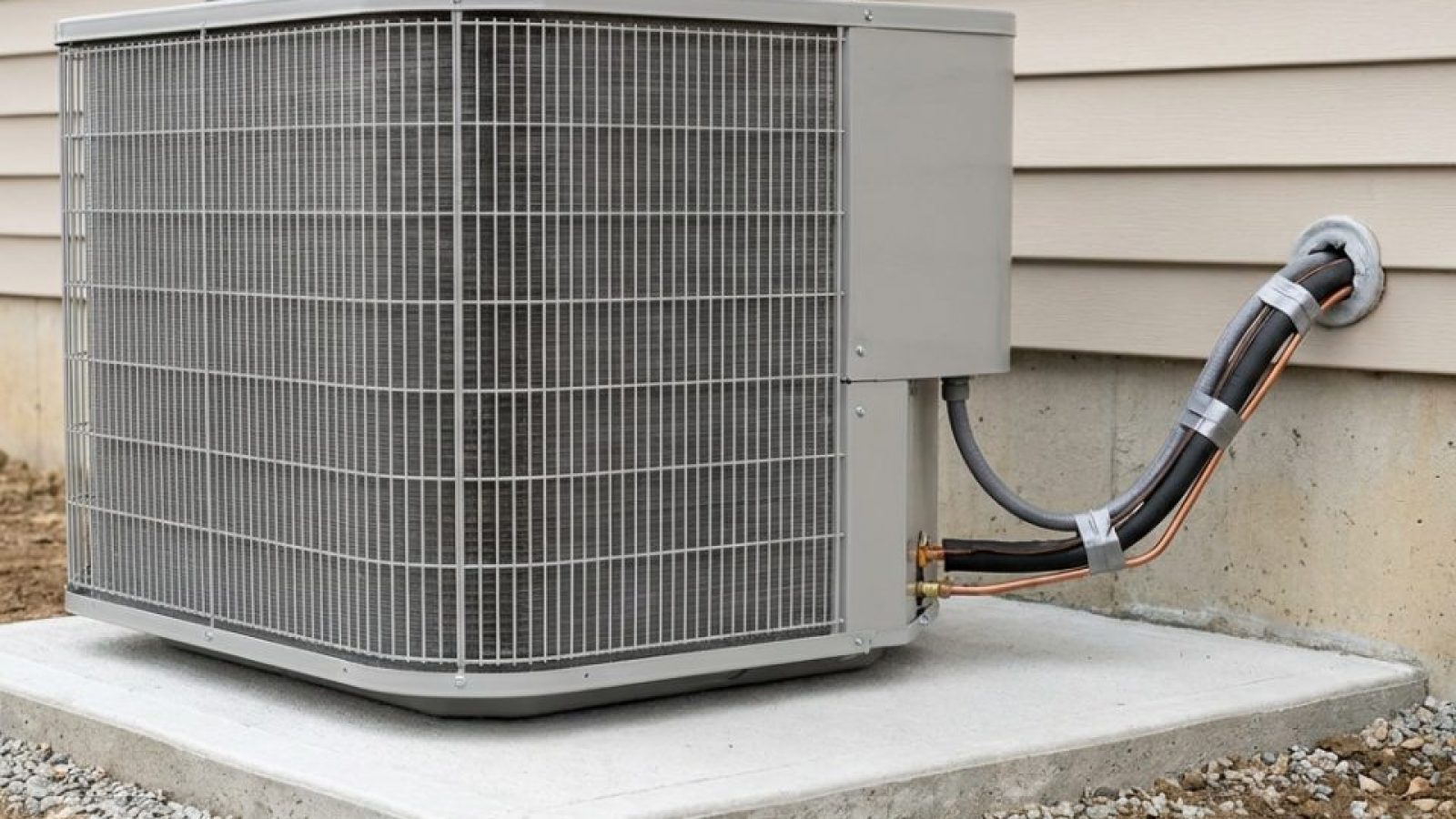
R-22 was phased out of production and import in the United States at the start of 2020. Systems still run legally on reclaimed refrigerant, but the supply is finite and priced accordingly. A major repair on an R-22 system frequently costs more than the system is worth. Check the data plate on the outdoor unit.
A cracked boiler section
On cast iron this is usually terminal. Water visible at the block, or persistent pressure loss with nothing findable in the piping, generally ends it.
A corroded evaporator or condenser coil on older equipment
The coil is a substantial share of the system cost, and fitting a new one to ageing equipment rarely makes sense. Near the New Jersey shore this arrives earlier than anywhere inland, because salt takes coils years before the rest of the system is worn.
What tips the decision in New Jersey specifically
Three local factors change the maths here.
The incentives are unusually good
If replacement is on the table at all, a heat pump is worth pricing alongside — New Jersey stacks a state rebate with a utility one, and that can close much of the gap against a like-for-like swap. It also collapses two systems into one.
Oil changes the answer
In the parts of Bergen, Passaic, Morris and Monmouth where oil is still common, a failing oil boiler is not really a repair-or-replace question — it is a fuel question, and the tank and the flue come with it.
Salt shortens everything at the shore
Shore equipment reaches end of life years earlier. A ten-year-old condenser in Ocean City may be further through its life than a fifteen-year-old one in Bridgewater, and the repair-or-replace threshold should move accordingly.
How to make the decision properly
Three things that turn a sales conversation into a decision.
Get both quoted, side by side
Ask for the repair price and the replacement price from the same contractor, in writing. A firm unwilling to quote the repair option is telling you something.
Ask what the next failure is likely to be
A technician who has just diagnosed your system knows what else is worn. If the answer is "the compressor, probably within two years", the repair is buying less than it appears to.
Do not decide it at midnight
A system that failed at 2am needs to get you through the night. Replacement is a fifteen-year decision and it deserves daylight, a load calculation and more than one quote.
Need this done?
AC Installation across New Jersey
Free to use, no obligation — we never charge you.
Frequently asked questions
Is it worth repairing a 15-year-old air conditioner?
Depends entirely on the fault. A capacitor or contactor, yes. A compressor or a sealed-system leak, usually not — and if it runs R-22, almost certainly not.
Should I repair or replace a 20-year-old furnace?
At twenty years, anything beyond a cheap consumable part is generally money into borrowed time. It is also the natural moment to price a heat pump, given New Jersey incentives.
How do I know if my system uses R-22?
The data plate on the outdoor unit states the refrigerant. R-22 systems are generally 2010 or older. If it says R-22 and the system is low on charge, replacement is usually the honest answer.
Should I replace the furnace and air conditioner together?
If both are of an age, often yes — they share the indoor cabinet and the labor overlaps, so doing them together costs less than doing them two years apart. It is also the natural point to consider a heat pump instead of both.
HVAC services near you
- Trenton
- Newark
- Paterson
- Jersey City
- Hamilton
- Parsippany
- New Brunswick
- Camden
- Clifton
- Edison
- Elizabeth
- Princeton
- Tinton Falls
- Hopatcong
- Plainfield
- Red Bank
- Robertsville
- Sayreville
- Toms River
- Vineland