HVAC guides
Why Your Second Floor Will Not Cool in a New Jersey Summer
Downstairs is comfortable, upstairs is eight degrees warmer, and somebody has already suggested a bigger air conditioner. It is almost never capacity — and a bigger system usually makes the house worse, not better.
Short answer
An upstairs that will not cool is a distribution problem, not a capacity one. The usual causes are duct runs that are longest to the top floor, returns concentrated downstairs, leaky or uninsulated ducts in a hot attic, closed or crushed branches, and attic heat gain. Fixing airflow costs far less than replacing equipment.
Why heat concentrates upstairs in the first place
Two things work against the top floor before any equipment is involved. Warm air rises, so the house naturally stratifies. And the second floor takes the roof load — in a New Jersey July an unshaded attic runs well over 120 degrees, and that heat presses down through the ceiling all afternoon.
So the upstairs starts with more heat to remove and, in most houses, less capacity delivered to remove it.
The five real causes, roughly in order
Work through these before anyone quotes you equipment.
Duct runs to the top floor are the longest
Air loses pressure over distance and at every bend. The branches feeding upstairs bedrooms are usually the longest in the system, so they deliver least — and if the system was balanced at all, it was balanced once, before anyone lived there.
Returns are concentrated downstairs
This is the one nobody looks at. A system can only supply as much air as it can pull back, and in a great many two-story New Jersey houses every return grille is on the ground floor. The upstairs gets pushed air with nowhere to go, so it does not move. Adding return capacity upstairs frequently transforms the problem.
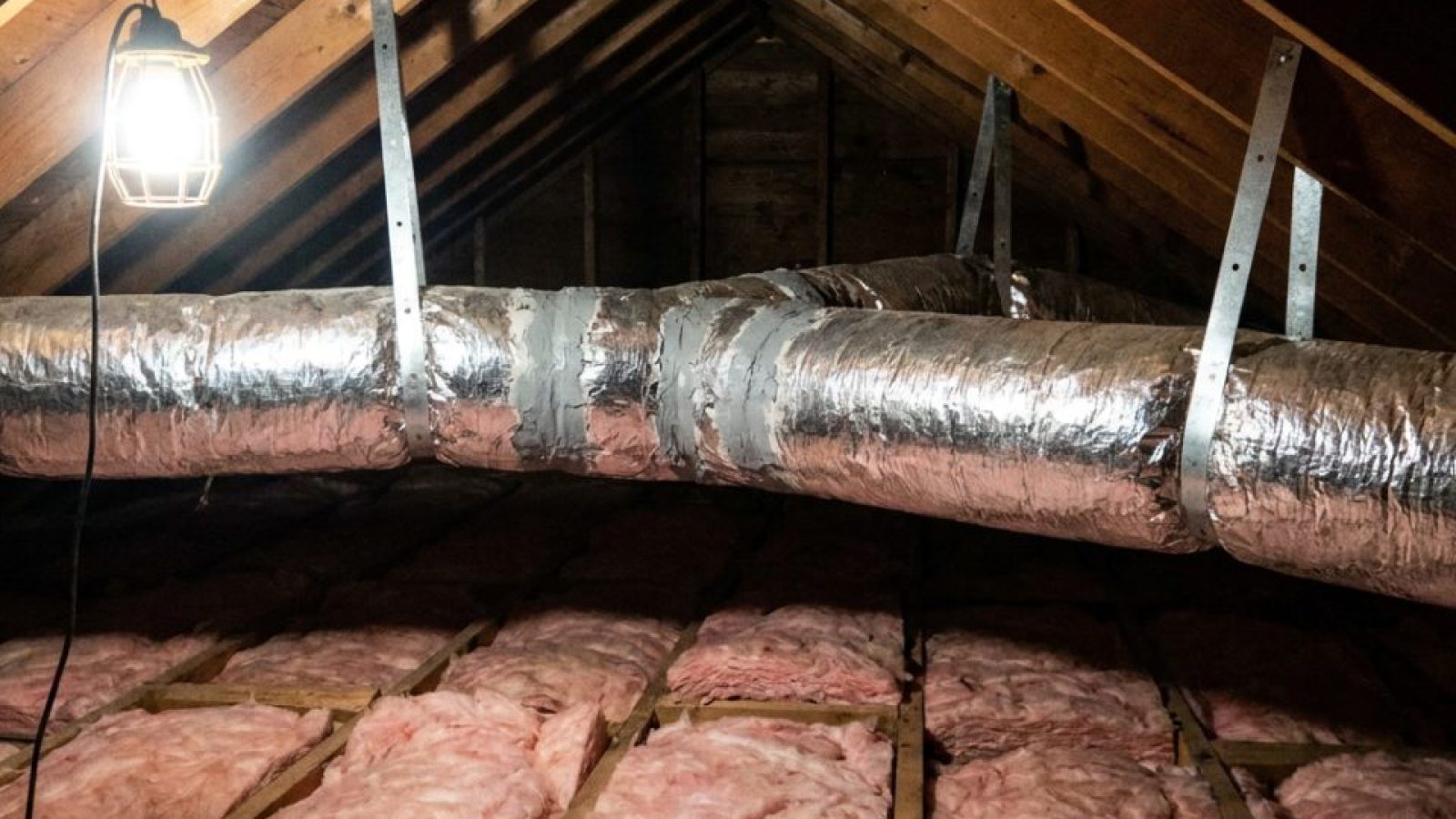
Ducts in an unconditioned attic
A supply duct crossing a 130-degree attic is losing cooling through its walls the entire way, even where it does not leak — and most leak. Air escaping into the attic is air you paid to cool. Sealing with mastic and insulating those runs is unglamorous and immediately effective.
Crushed, kinked or disconnected flex duct
Flexible duct performs well installed properly and badly otherwise. Sags between joists, sharp bends and compression where it passes a rafter all choke airflow. A branch that has come off its boot entirely — which happens — cools the attic beautifully and the bedroom not at all.
Dampers closed and forgotten
Many systems have manual dampers in the basement branches. Somebody adjusted them for winter in 2014 and nobody has touched them since. Free to check, free to fix.
What actually fixes it, cheapest first
In rough order of cost.
Balance the dampers, and change the filter
Costs nothing. Open the upstairs branches, close the downstairs ones partially, run it for a day. A restricted filter also starves the whole system, and the furthest rooms feel it first.
Seal and insulate attic ductwork
A day's work, no equipment replaced, and frequently the single largest improvement available in a house with ducts in the attic.
Add return capacity upstairs
More involved, but it addresses the cause rather than the symptom. If air cannot get back, it will not flow forward.
Insulate and ventilate the attic itself
Not an HVAC job, but it reduces the load the system is fighting. In New Jersey's older housing stock, attic insulation is frequently thin by modern standards and it is one of the better returns available.
Zoning, or a ductless head
If the duct geometry genuinely cannot be fixed, a zoned system with motorized dampers or a single ductless head serving the upstairs solves it directly. That is a real expense, but it is still less than replacing a system that was never the problem.
Why a bigger system makes it worse
This is worth being blunt about, because it is the most commonly proposed answer.
A larger air conditioner reaches the thermostat setpoint faster and shuts off sooner. Shorter run times mean less total air moved, so the rooms furthest from the air handler — the upstairs ones — get less than they did before. It also dehumidifies less, so the house feels clammy on top of being uneven.
If a contractor proposes upsizing without measuring airflow or looking at the returns, get a second opinion.
Need this done?
Ductwork Repair and Sealing across New Jersey
Free to use, no obligation — we never charge you.
Frequently asked questions
Should I just close the downstairs vents?
Partially, yes — that is balancing and it helps. Closing them entirely does not: it raises static pressure across the system, which reduces total airflow and can freeze the coil. Restrict, do not seal.
Is a bigger AC the answer?
Almost never, and it usually makes the problem worse. Shorter run times move less air to the rooms that already receive least, and the house dehumidifies poorly on top.
How do I know if my ducts are leaking?
Dust returning within days of cleaning, rooms that never match, and running costs out of step with equipment that tests fine. A contractor can measure it properly rather than guessing.
Would a ductless head upstairs work?
Yes, and it is a common and effective answer where the ductwork genuinely cannot be fixed — particularly in older New Jersey houses where the upstairs was finished later and never properly served.
HVAC services near you
- Trenton
- Newark
- Paterson
- Jersey City
- Hamilton
- Parsippany
- New Brunswick
- Camden
- Clifton
- Edison
- Elizabeth
- Princeton
- Tinton Falls
- Hopatcong
- Plainfield
- Red Bank
- Robertsville
- Sayreville
- Toms River
- Vineland