224 cities and towns covered
Boiler Repair in New Jersey
Boilers heat a great deal of northern New Jersey, and steam and hot water fail for unrelated reasons. Most uneven-heat complaints in an older building are a balancing or venting problem rather than a failing boiler — and balancing costs a fraction of replacement.
Leave the building and call from outside — that is an emergency services call, not a service call. A yellow burner flame or headaches that clear when you leave the house point the same way. For no heat in freezing weather, call rather than read on: the risk there is frozen pipes rather than comfort, and it arrives within hours.
Call about boiler repair
(949) 703-2282Free to use, and there is nothing to pay us. You are never committed to going ahead.
What happens when you call
- You describe the problem and where you are.
- We put you in touch with a licensed contractor covering that area.
- They arrange the visit and agree the price with you directly.
Worth having to hand
- Roughly how old the system is
- What it is doing — or not doing
- Your ZIP code
What to ask for on Boiler Repair
- Same-day reply on no-heat calls in winter
- Uneven heat is usually a system problem, not a boiler problem
- Ask whether the contractor actually works on steam
- A dropping pressure gauge means a leak somewhere
- Licensed & insured We match you with contractors who hold current licensing and cover.
- Know what to ask Every page says what decides the price, so you can judge a quote.
- Free to use We never charge you. Compare quotes and walk away at any point.
- Same-day reply Inquiries answered the day they arrive, usually within a couple of hours.
How it works
Three steps, no obligation at any of them.
-
1
Call and tell us what is wrong
Describe the problem and give us your ZIP code. We match you with a licensed HVAC contractor covering your area — there is nothing to fill in and nothing to pay us.
-
2
A local contractor gets in touch
A licensed HVAC professional contacts you to discuss the problem and arrange a visit. What they charge to attend or diagnose is theirs to set, so agree it with them up front.
-
3
You decide
Book the work, wait a season, or get a second quote. There is no obligation to go ahead with the contractor we introduce you to, and nothing to pay us either way.
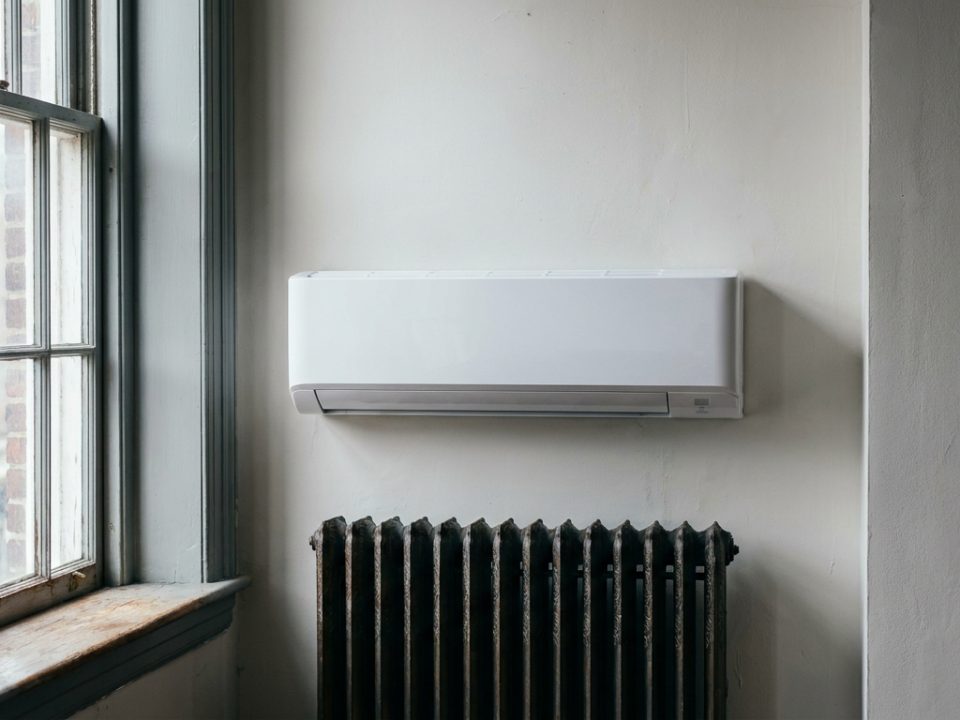
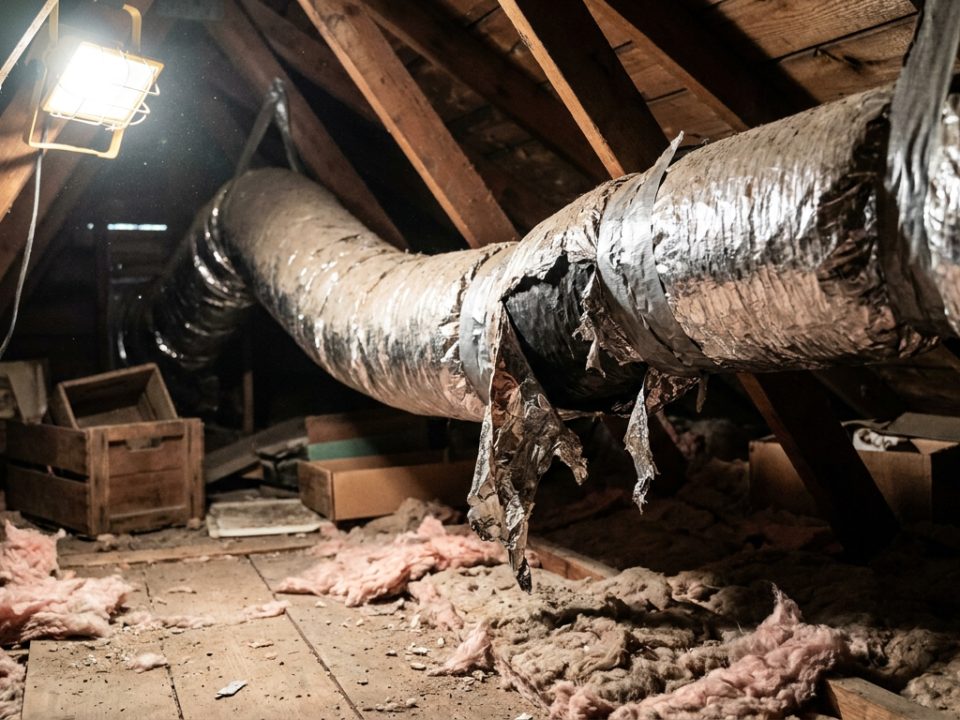
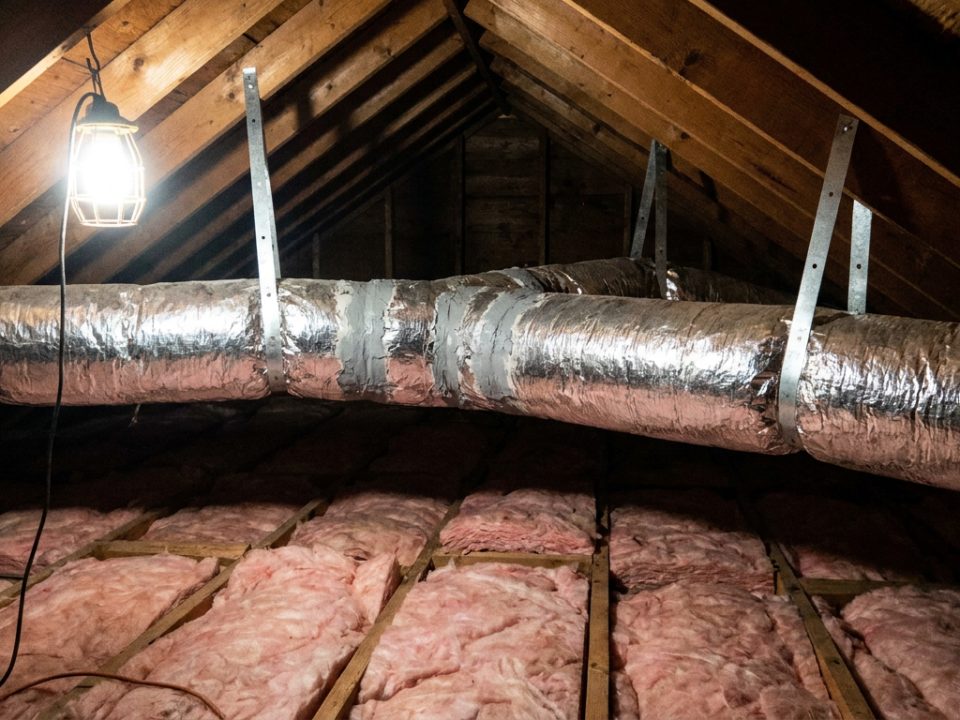
What these repairs look like
Illustrative examples of the work described here. More in our disclaimer.
First, which system do you have?
It changes everything about the diagnosis, and plenty of homeowners are not sure.
Steam
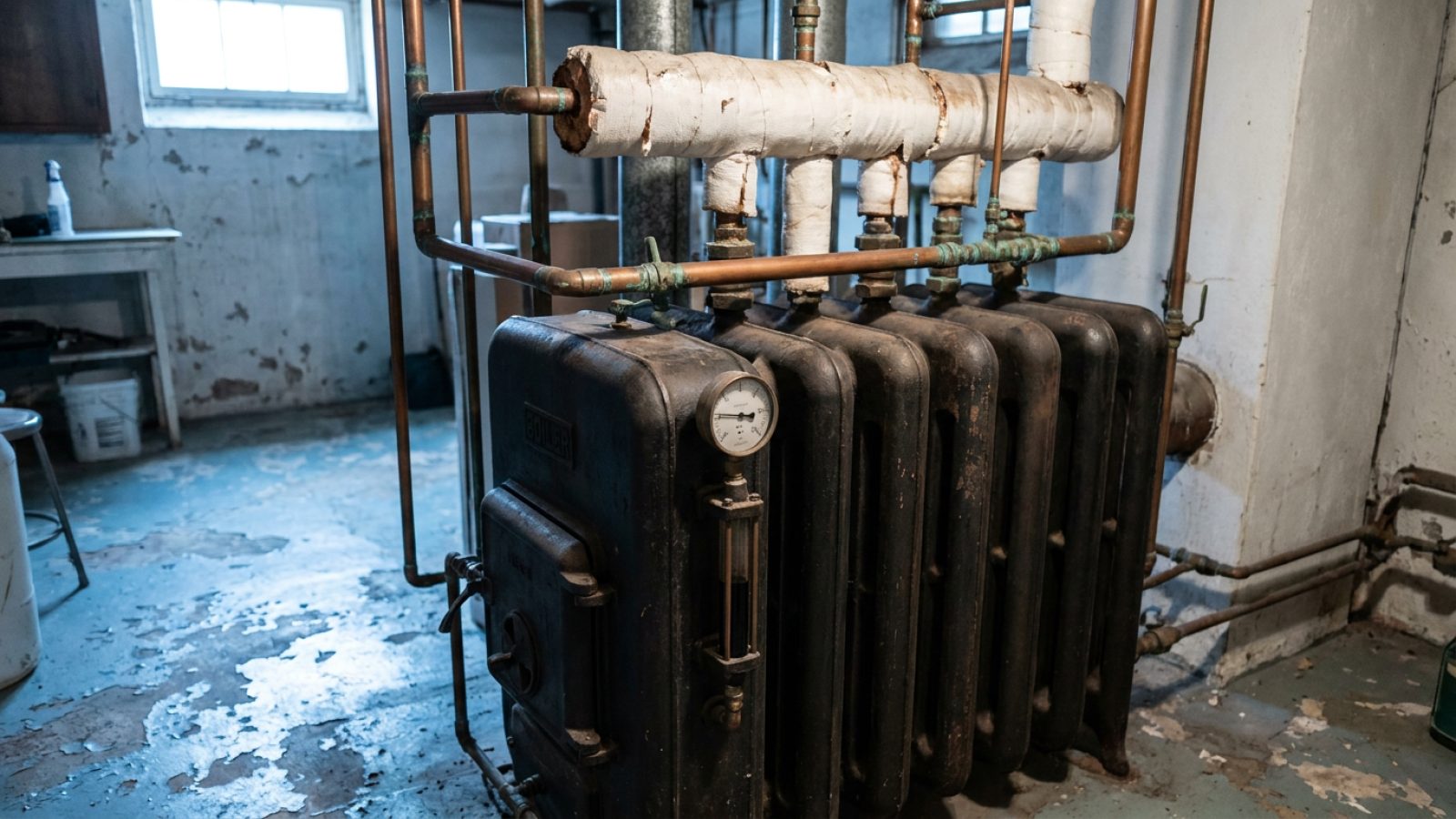
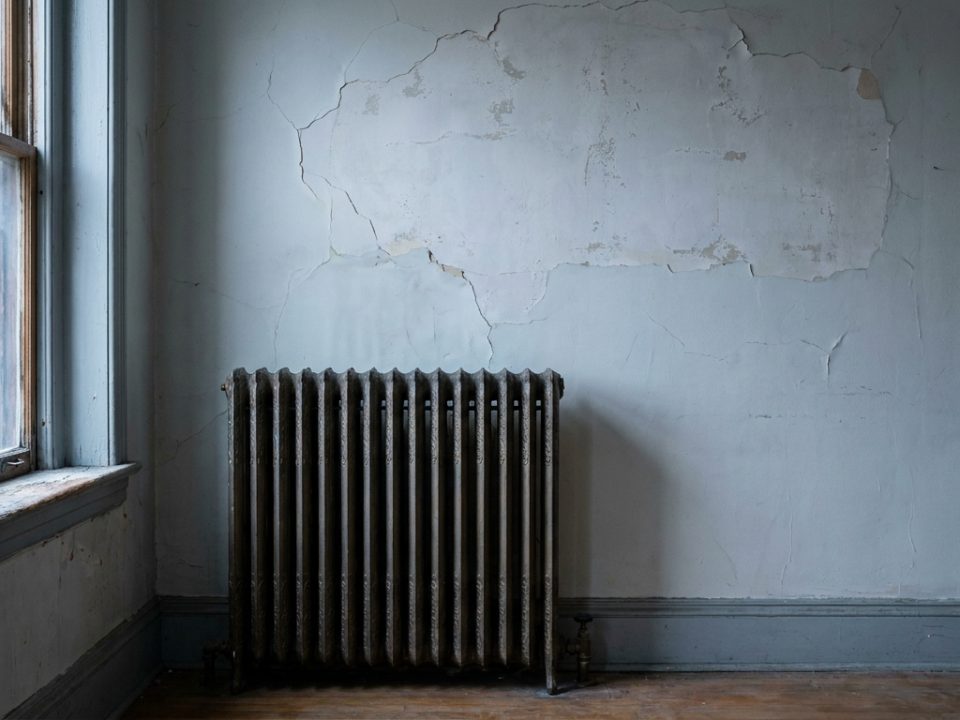
One pipe entering each radiator, a vent on the side of each radiator, and a sight glass on the boiler showing a water level. It hisses when heating. Common in pre-war Hudson, Essex and Passaic housing and in the older Trenton and Newark stock. Steam runs at very low pressure — usually under two pounds — and a contractor who wants to raise the pressure to fix uneven heat has misdiagnosed it.
Hot water, or hydronic
Two pipes at each radiator or baseboard, a circulator pump on the boiler, a pressure gauge reading somewhere around 12 to 15 psi cold, and an expansion tank. It is quiet. Common in mid-century and later housing across the state.
Steam: why some radiators heat and others do not
Almost always air, not water. Steam can only fill a radiator once the air already in it has been pushed out, and it takes the path of least resistance — so the near radiators heat and the far ones stay cold.
Main vents matter more than radiator vents
The large vents on the distribution mains in the basement do most of the work, and in a great many New Jersey buildings they are missing entirely or painted shut. Fitting proper main venting is frequently the single most effective repair on a steam system and it costs a fraction of what people expect.
Radiator vents are consumable
They fail closed, which starves the radiator, or open, which spits water. They are cheap and replaceable. Adjustable vents let a system be balanced so the far rooms get their share.
Banging is pitch, not pressure
Water hammer happens when condensate cannot drain back and steam slams into it. The cause is a radiator or a pipe run that has lost its slope — often after a floor was refinished or a radiator was moved. Shimming a radiator back to pitch frequently ends years of banging.
Hot water: pressure, air and circulation
Different system, different failure list.
Pressure that keeps dropping
A closed system should hold its pressure. One that needs topping up is losing water — commonly at the relief valve, the expansion tank, or a fitting in the distribution piping. If an automatic feeder is quietly making it up, it is masking the leak, and the fresh water it adds brings oxygen that corrodes the system from inside.
A waterlogged expansion tank
The tank absorbs expansion as the water heats. When it loses its air charge, pressure spikes sharply on every heating cycle and dumps through the relief valve. That looks like a faulty relief valve and is not — replacing the valve without fixing the tank just repeats.
Air in the system, or a failed circulator
Gurgling and cold upper-floor radiators usually mean trapped air, which bleeding clears. A boiler that gets hot while nothing else does points at the circulator or a stuck zone valve.
What ends a boiler
Boilers are long-lived — thirty years is common on cast iron and older ones survive longer than that. A few findings genuinely end them.
A cracked or leaking section
Water visible at the block, or persistent loss with no leak findable in the piping. On cast iron this is usually terminal.
A failed heat exchanger on a modern condensing boiler
Expensive enough on an older unit to reopen the replacement question outright.
Combustion or venting faults
Anything producing carbon monoxide, or a flue that has deteriorated to the point of not drafting, is a stop-now finding rather than a scheduling matter.
Boiler Repair — frequently asked questions
Why is my boiler running but not producing enough heat?
On steam this is nearly always venting — the air cannot get out fast enough for steam to fill the system, so the far radiators never heat. Main vents matter more than radiator vents, and in many New Jersey buildings they are missing entirely. On hot water, look at circulation: a failing circulator, a stuck zone valve, or trapped air. In both cases the boiler is usually fine and the system around it is not.
Why does my boiler keep losing pressure?
A hot water system that loses pressure has a leak — usually the relief valve, the expansion tank, or a fitting in the distribution piping. An expansion tank that has lost its air charge shows up as pressure climbing sharply when the system heats and then dumping through the relief valve, which looks like a faulty valve and is not.
Why do my radiators bang?
On steam, water hammer — condensate trapped where steam wants to travel, almost always because a radiator or pipe run has lost its pitch. Shimming the radiator so it drains back toward the pipe fixes a surprising number of cases. Persistent banging after that usually means a sagging main in the basement.
Can I bleed my own radiators?
On a hot water system, yes — a bleed key, a cloth, open until water runs steadily, close. Check the pressure afterwards and top up if needed. On a steam system, no: those vents are not bleed valves and opening one while the system is hot will vent steam at you.
Can an HVAC contractor work on steam heating?
Some can and many cannot, and it is worth asking directly rather than assuming. Steam is a different discipline — sizing is by connected radiation rather than heat loss, near-boiler piping has to follow the manufacturer diagram, and most uneven-heat complaints are venting and pitch. A contractor whose first answer to uneven steam heat is a bigger boiler has not worked on much steam.
Is a cold radiator an emergency?
One cold radiator in an otherwise warm house is not — it is a balancing or venting job for a weekday. The whole house cold in freezing weather is urgent, because of pipes rather than comfort.
Who repairs boilers and radiators in older New Jersey homes?
Contractors who work on hydronic and steam systems specifically, which is not every HVAC firm. Ask directly how many steam systems they worked on last year — steam is a separate discipline, and a company that mostly fits forced air is not the same proposition. In Hudson, Essex, Passaic and the older Trenton and Newark housing this matters a great deal.
How much does boiler repair cost in New Jersey?
Wide range, and it depends on the system as much as the fault. On steam, the most common work is venting and pitch — genuinely inexpensive and frequently transformative. On hot water, circulators, zone valves and expansion tanks are moderate. A cracked section on cast iron is a replacement rather than a repair. Ask which of those you are facing before discussing money.
Boiler Repair near you
We cover cities and towns across New Jersey.
Boiler Repair guides
Everything we have written on this job — costs, timing, and how to tell what you are actually looking at.