HVAC guides
Buried Oil Tanks in New Jersey: What Homeowners Need to Know
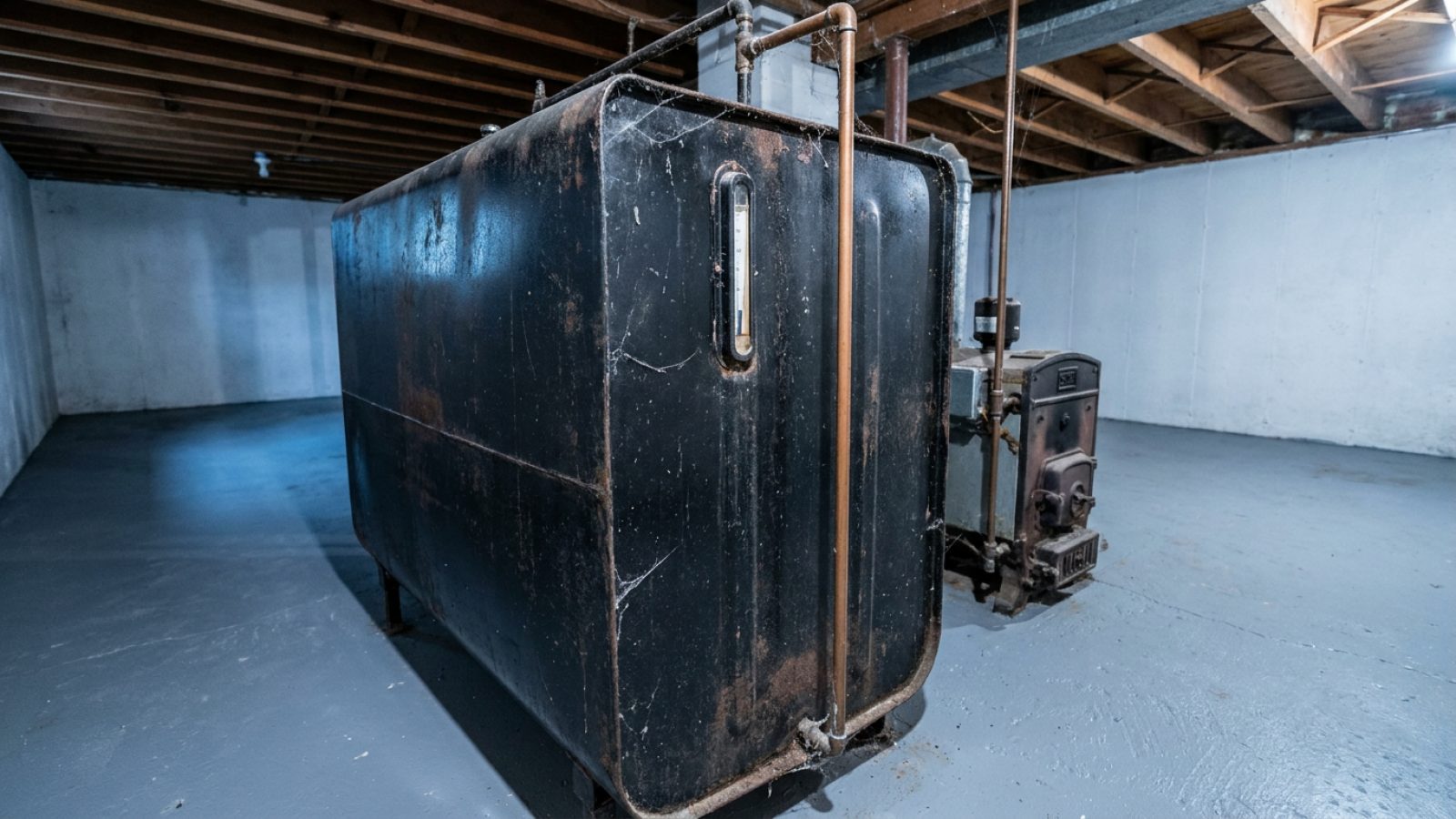
Thousands of New Jersey homes have, or had, a buried heating oil tank. Most were installed decades ago with no corrosion protection, and what happens when you deal with one properly is very different from what happens when somebody dealt with it quietly.
Short answer
An underground storage tank is closed either by removal or by closure in place, both governed processes producing documentation. If it has leaked, contaminated soil becomes a matter for the New Jersey Department of Environmental Protection. The documentation is what a buyer's attorney will ask for at resale.
Why New Jersey has so many of them
Oil heat was the norm across much of the state through the mid-twentieth century, and burying the tank kept it out of the basement and out of sight. Steel tanks installed in the 1950s, 60s and 70s were not built with the corrosion protection later standards require, and buried steel in wet soil has a finite life.
Many are long out of service, filled or simply abandoned when the house converted to gas. Those are the ones that surface unexpectedly.
How to tell if you have one
Look for a fill pipe or vent pipe protruding from the ground or the wall near where an oil line would run. Capped pipes in a basement wall that go nowhere are a strong signal. Older survey documents and the property file at the municipality sometimes record it. A tank sweep — a magnetic or ground-penetrating survey — is inexpensive and definitive.
Removal versus closure in place
Two legitimate routes, and the right one depends on access and circumstances.
Removal
The tank is emptied, cleaned, excavated and taken away, and soil samples are taken from the excavation. It is the cleaner outcome because it settles the question — you know what the soil looks like, and there is nothing left in the ground.
Closure in place
Where a tank sits under a structure, a driveway or otherwise cannot be reached, it can be emptied, cleaned and filled with an inert material, with soil sampling around it. It is a recognized approach, but it leaves a tank in the ground, and some buyers and lenders treat that differently.
What is not acceptable
Filling a tank with sand without cleaning, sampling or documenting it. This happened widely and it is the situation that turns into a problem at closing rather than at the time — an undocumented tank is a disclosure issue and a lender question.
When it becomes a contamination matter
If the tank has leaked, the scope changes from a tank job to an environmental one.
What triggers it
Soil sampling around the tank that comes back above the applicable standard. At that point there are notification obligations and the work becomes remediation under the New Jersey Department of Environmental Protection framework, typically overseen by a Licensed Site Remediation Professional.
Scale varies enormously
A small localized release under the tank is a different proposition from one that has reached groundwater or migrated onto a neighboring property. This is the part nobody can price in advance, which is exactly why sampling matters — you want to know before you are mid-transaction.
Funding has existed
New Jersey has at various points run grant funding to help homeowners with residential tank removal and remediation. Availability and criteria change, so ask a contractor who does this work in this state regularly rather than assuming either way.
Timing it with a heating replacement
If the tank is still in service and the boiler or furnace is near end of life, the two decisions belong together.
Converting to gas means the tank comes out of service anyway, so dealing with it properly at the same time avoids paying for two separate mobilizations and gets the documentation while you are not under time pressure from a sale.
And where there is no gas main in the street — parts of Sussex, Warren and the rural south — a cold-climate heat pump removes the fuel question entirely, with the state and utility rebates stacking on top.
Need this done?
Oil to Gas Conversion across New Jersey
Free to use, no obligation — we never charge you.
Frequently asked questions
Do I have to remove a buried oil tank?
Not necessarily — closure in place is a recognized option where removal is impractical. What you should not do is leave one undocumented. The documentation is what settles the question at resale, and its absence is what creates the problem.
How do I know if my tank has leaked?
Soil sampling around the tank, which is part of any proper removal or closure. Symptoms like an oil smell in a basement or unexplained consumption are signals, but the only answer is testing.
Will a buried tank stop me selling the house?
It complicates a sale rather than preventing one. Buyers ask, attorneys ask, and lenders sometimes ask. A tank properly closed with documentation is a non-issue; an undocumented one becomes a negotiation.
Can I do a tank sweep before buying a New Jersey house?
Yes, and it is routine here for older properties. It is inexpensive relative to what it protects against and is worth doing during the inspection period rather than after.
HVAC services near you
- Trenton
- Newark
- Paterson
- Jersey City
- Hamilton
- Parsippany
- New Brunswick
- Camden
- Clifton
- Edison
- Elizabeth
- Princeton
- Tinton Falls
- Hopatcong
- Plainfield
- Red Bank
- Robertsville
- Sayreville
- Toms River
- Vineland