HVAC guides
Getting a New Jersey Home Ready for Winter
The first sustained cold snap generates more no-heat calls in a few days than the preceding two months, and almost all of them are on systems that were fine in March and have sat untouched since. Most of that is avoidable in an afternoon.
Short answer
Book the heating service in September or October rather than during the first freeze. Change the filter, test the system before you need it, check carbon monoxide alarms, clear the flue and condensate routes, and know where your shut-offs are.
Do these yourself, in about an hour
None of it needs a technician and all of it prevents calls.
Run the heat before you need it
Turn the thermostat up on a mild September day and let the system run for twenty minutes. You are checking that it lights, that heat actually arrives at the registers or radiators, and that nothing smells wrong beyond the usual first-run dust burn-off. Finding a fault on a 60-degree day is an appointment. Finding it at 15 degrees is an emergency.
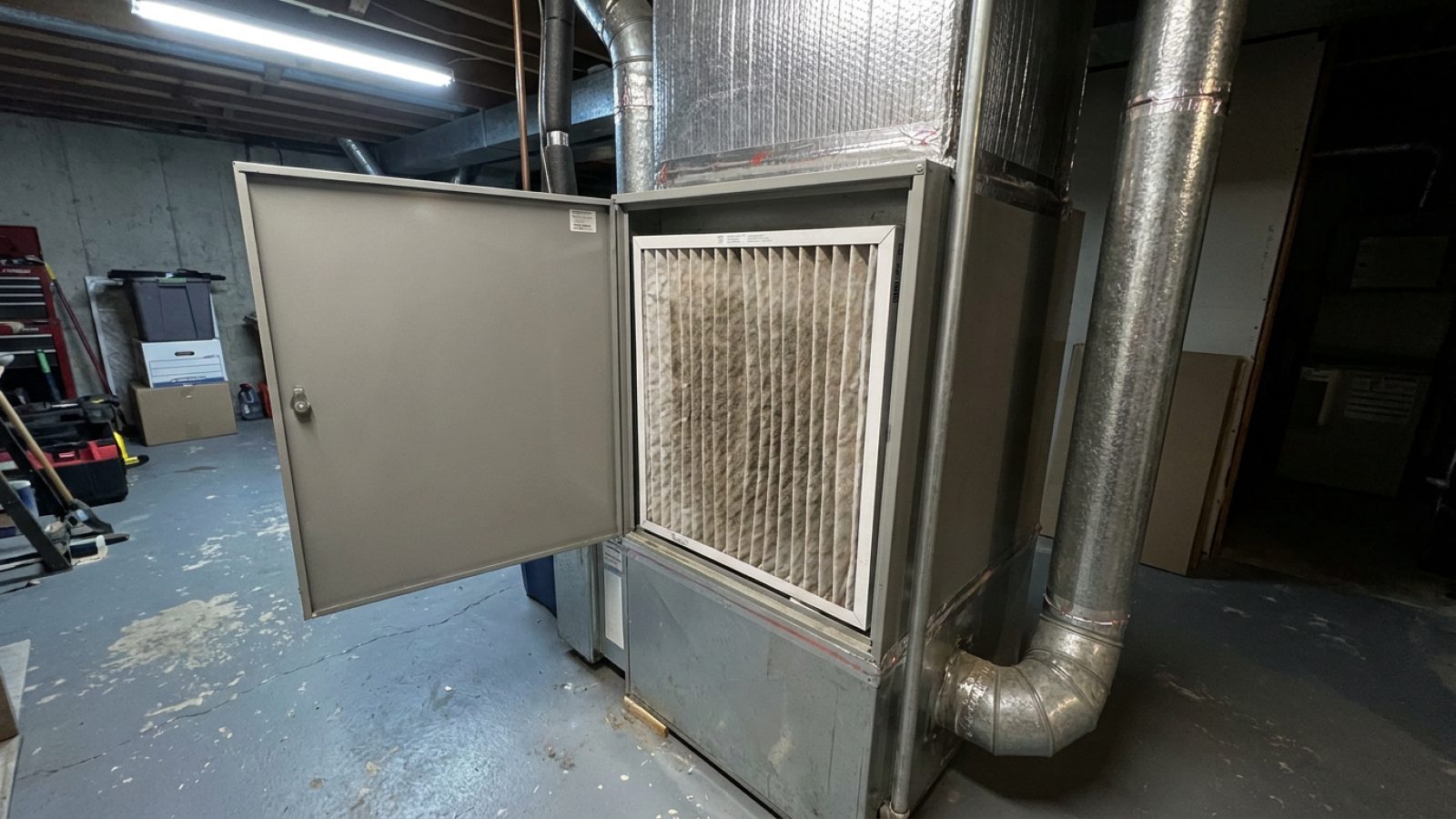
Change the filter
The cause of a genuinely large share of no-heat calls. A restricted filter trips the limit switch, so the furnace heats, stops before the house is warm, then restarts. Note the size printed on the frame and keep spares.
Test the carbon monoxide alarms
New Jersey requires them, and they expire — most have a service life stamped on the back, typically seven to ten years from manufacture. Press the test button on each, and check the date. This is the backstop for the one furnace failure that genuinely matters.
Clear the outside terminations
High-efficiency furnaces and boilers vent through PVC out a side wall, and those pipes have to stay clear — of leaves, of shrubs, and later of drifted snow. A blocked intake or exhaust shuts the appliance down, and after a heavy snowfall that is a common call that a homeowner could have prevented.
Find your shut-offs now
The gas shut-off, the water main, the service switch for the furnace or boiler, and the breaker. Knowing where they are before something goes wrong is worth more than it sounds at two in the morning.
What the annual service is actually for
Book it in September or October, not January.
The combustion analysis
The part that cannot be eyeballed and the reason the visit matters. It measures what is actually coming out of the flue, which is how incomplete combustion and cracked heat exchangers are found before they become dangerous.
The consumables
Flame sensor cleaned, igniter checked, condensate trap cleared, safeties tested. These are the parts that fail first, and they are far cheaper to replace on a scheduled visit than at an after-hours rate.
The warranty condition
Most manufacturer warranties require documented annual servicing, and that condition is enforced more often than people expect. Keep the invoice — it is the documentation.
Specific to older New Jersey housing
Three things that matter more here than in newer construction.
Steam systems want attention before the season
Check the sight glass water level, and look at whether the main vents in the basement are doing anything. Uneven heat that arrives in December is usually a venting problem that could have been sorted in October.
If you heat with oil, look at the tank
Level, obviously, but also the condition of the tank and lines if it is above ground. And if there is a buried tank, this is the season it matters — a failure in February is a much worse time to be dealing with it.
Pipes on exterior walls
Older New Jersey housing frequently runs plumbing through uninsulated exterior walls. Know which ones, because those are the ones to protect if the heat ever does fail: cabinet doors open, a thin trickle running from the furthest faucet.
Need this done?
HVAC Maintenance and Tune-Ups across New Jersey
Free to use, no obligation — we never charge you.
Frequently asked questions
When should I book heating service in New Jersey?
September or October. Booking during the first cold snap means joining a queue behind everyone whose system actually failed, and paying more for the privilege.
What temperature should I leave the house at if I go away in winter?
No lower than about 55 degrees, and lower than that only if the plumbing has been drained. The point is protecting pipes rather than comfort, and older New Jersey housing with pipes in exterior walls is more vulnerable than the thermostat suggests.
Do I need to do anything after heavy snow?
Check the exhaust and intake pipes on a high-efficiency furnace or boiler, and clear drifts around them. A blocked termination shuts the appliance down as a safety response, and it is one of the most common post-storm calls.
How do I know if my CO alarms are still good?
Press the test button, and check the manufacture date on the back — most have a seven to ten year service life and stop being reliable after it, whether or not they still chirp.
HVAC services near you
- Trenton
- Newark
- Paterson
- Jersey City
- Hamilton
- Parsippany
- New Brunswick
- Camden
- Clifton
- Edison
- Elizabeth
- Princeton
- Tinton Falls
- Hopatcong
- Plainfield
- Red Bank
- Robertsville
- Sayreville
- Toms River
- Vineland