HVAC guides
Smart Thermostats and Zoning in New Jersey Homes
A smart thermostat is a good buy for the right reason and a disappointment for the wrong one. It will not fix a room that never gets warm — that is a distribution problem, and zoning is the tool for it.
Short answer
Smart thermostats save money through scheduling and setback, not through better control of a system that is already struggling. If one room never matches the rest, the answer is airflow or zoning. In older New Jersey homes the practical obstacle is often the missing common wire.
What a smart thermostat actually does for you
The savings are real but they come from one mechanism: heating and cooling the house less when nobody needs it.
Scheduling that actually holds
The largest single saving in most houses is not conditioning empty space. A programmable schedule that matches when people are actually home does that, and a smart thermostat mainly makes the schedule easier to set and harder to forget.
Remote control and alerts
Genuinely useful in New Jersey for two cases: a shore or weekend property you want warm before you arrive, and a low-temperature alert on an empty house in January, which is a freeze warning rather than a comfort feature.
Runtime data
The underrated feature. Most report how many hours the system ran. A month-on-month jump with no weather change is an early warning that something is deteriorating, and it is the closest thing a homeowner has to diagnostics.
The wiring problem in older New Jersey housing
The most common practical obstacle, and worth checking before buying anything.
The common wire
Most smart thermostats need a continuous power supply, which comes from a "C" or common wire. A great deal of older New Jersey wiring ran only the conductors a simple thermostat needed, so there is no C wire at the wall. Pull the existing thermostat off and count the wires before ordering.
The workarounds
An add-a-wire adapter at the furnace, running a new cable, or choosing a model that works without a C wire. All are viable; the adapter is usually cheapest and running new cable is cleanest.
Steam and hot water systems
Boiler controls differ from forced air and not every smart thermostat suits them, particularly on millivolt systems or where zone valves are involved. Check compatibility against your system type rather than assuming.
When zoning is the real answer
If one part of the house never matches the rest, no thermostat fixes that — a thermostat can only ask for more of what the ductwork is already failing to deliver.
What zoning is
Motorized dampers in the ductwork and a thermostat per zone, so areas of the house call for heating or cooling independently. The upstairs can run cooler in summer without freezing the ground floor.
What it needs to work
A system that can cope with reduced airflow when zones close — a variable-speed or two-stage unit, or a properly designed bypass. Retrofitting zoning to a single-stage system without accounting for that chokes it, which trades one problem for another.
The cheaper alternatives first
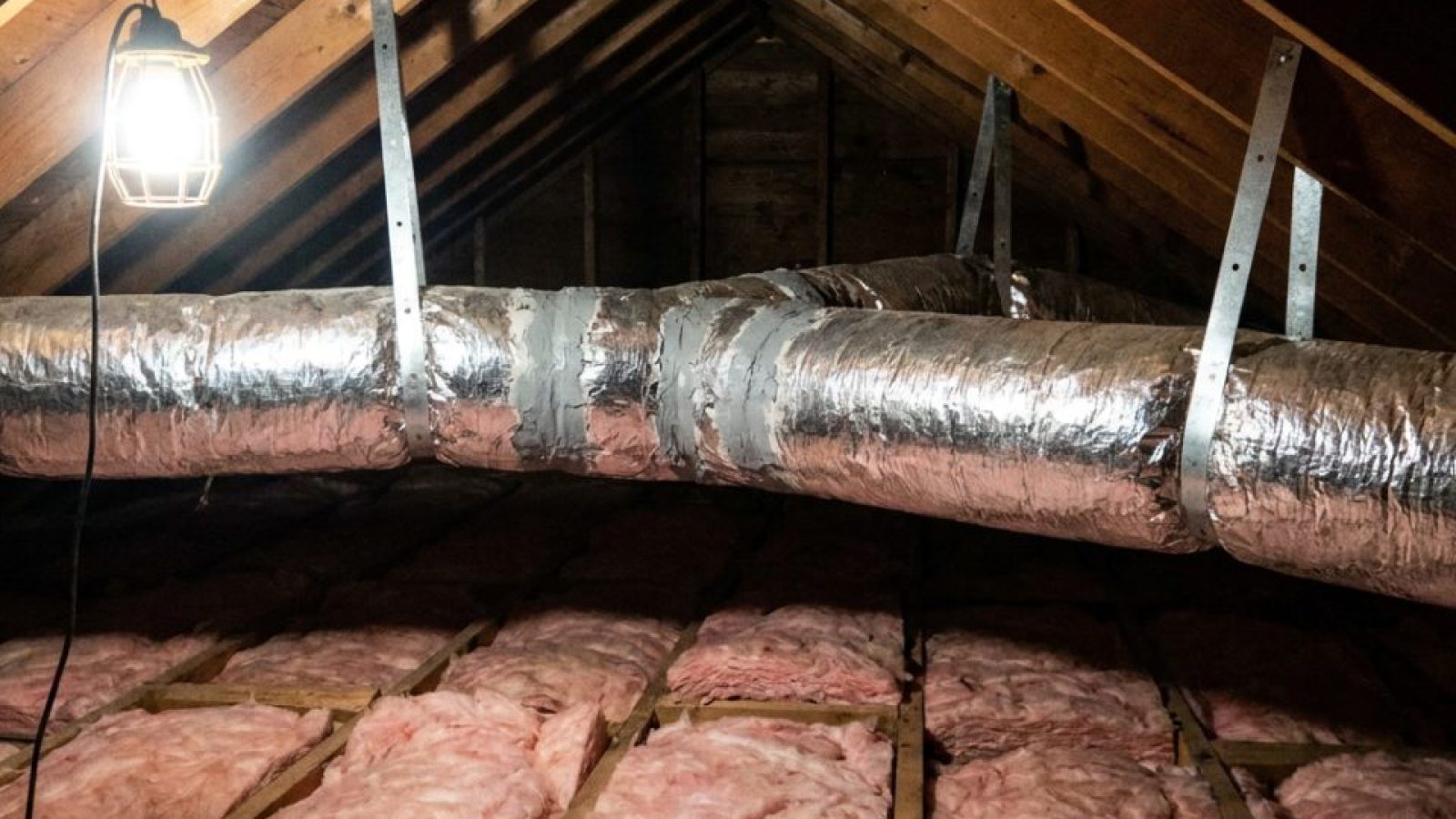
Before zoning: balance the existing dampers, seal and insulate ducts in unconditioned space, and check whether the upstairs has adequate return capacity. Those three fix a large share of uneven-temperature complaints for a fraction of what zoning costs.
Or a ductless head
In houses where the duct geometry genuinely cannot be improved — common in older New Jersey homes where an attic was finished later — a single ductless head serving that space solves it directly and often for less than zoning the whole system.
Need this done?
Ductwork Repair and Sealing across New Jersey
Free to use, no obligation — we never charge you.
Frequently asked questions
Will a smart thermostat lower my bills?
Through better scheduling, yes, modestly and reliably. It will not make a struggling system perform better, and it will not fix a room that never reaches temperature.
Why is my thermostat blank?
Usually flat batteries or a lost common wire. A thermostat that is lit but not controlling anything often means a tripped safety has locked the equipment out — commonly a blocked condensate line or a float switch. Check the filter and drain before blaming the thermostat.
Can I install one myself?
Often, on a straightforward forced-air system with a C wire present — photograph the existing wiring before disconnecting anything. If there is no C wire, or the system is a boiler with zone valves, it is worth having done properly.
Is zoning worth it?
Where the ductwork genuinely cannot deliver evenly, yes. But try balancing, duct sealing and added return capacity first — those are far cheaper and fix a large share of cases.
HVAC services near you
- Trenton
- Newark
- Paterson
- Jersey City
- Hamilton
- Parsippany
- New Brunswick
- Camden
- Clifton
- Edison
- Elizabeth
- Princeton
- Tinton Falls
- Hopatcong
- Plainfield
- Red Bank
- Robertsville
- Sayreville
- Toms River
- Vineland